
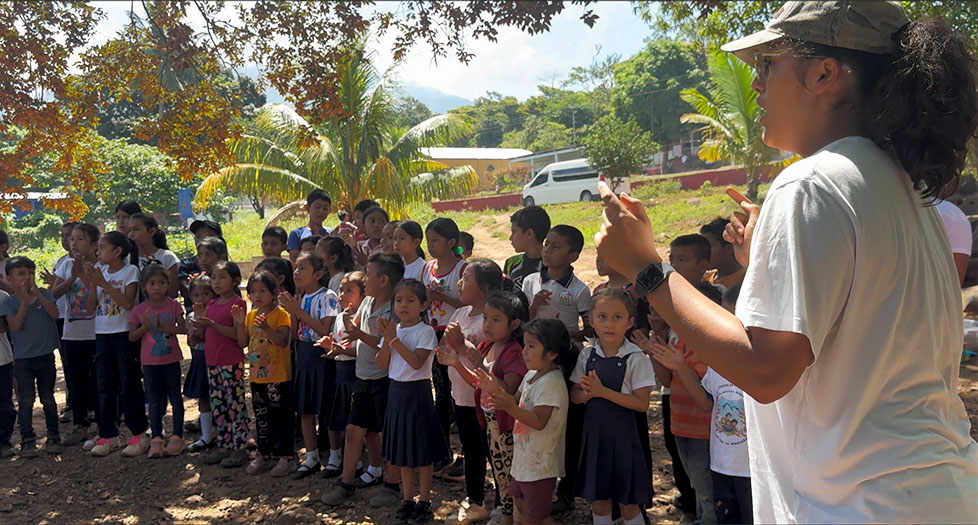
Two months in the villages, from Irene — our missions coordinator
Irene coordinates our mission teams, which means she sees more of this ministry than almost anyone — the arrivals, the villages, the long drives, the goodbyes.
Her report this month had two stories in it. One about something that happened years after a mission trip ended, and one about a hill.
July: the part of a mission trip you never see
Irene missed the mobile clinics in July. She was serving at Teen Quest Ranch instead — and what she found there turned out to be its own kind of gift.
She met people who had come to Guatemala with one of our teams the year before, who had spent their week running children’s activities in villages.
“It was really cool to see that some of them are now thinking about to study medicine and are interested in coming back to serve as volunteers and participate in medical missions in our area.”
Think about what that actually means.
A young person spends a week in a Guatemalan village playing with kids, helping at a clinic, watching medical professionals work in conditions they’ve never imagined. They go home. School starts. Life resumes.
And a year later, they’re looking at medical school.
We talk about short-term teams in terms of what gets done during the week — the patients seen, the food distributed, the homes visited. That’s real, and it matters. But it isn’t the whole return. Some of what a mission trip produces doesn’t show up for a decade, in a career that didn’t exist as a possibility before someone got on a plane.
“Seeing how God can use one mission experience to plant a desire to serve Him in the future was very meaningful to me.”
We may never see the end of that story. We don’t need to.
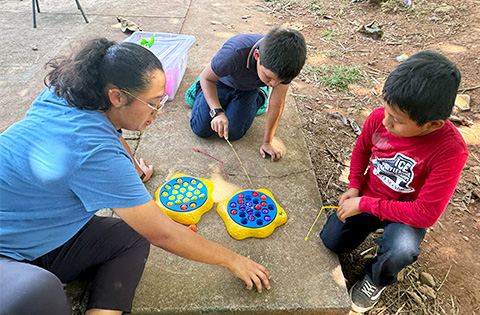 A week in a village. A decision a year later.
August: two teams, two weeks, one honest admission
August brought two mission teams back to back — two consecutive weeks of full-throttle ministry.
Irene’s reflection on how it all held together is worth quoting, and so is her honesty about her own role in it:
“Looking back, I think we were able to accomplish everything we did because we knew our strength comes from God. I did not have the same responsibilities that Jeff or Julio had, so I could even take naps on the way to or from the villages.”
I’ll vouch for the naps. She earned them.
But the moment she carried home from those two weeks wasn’t about logistics at all.
The bag, the hill, and the man who didn’t take no for an answer
After one of the clinics, the team distributed food bags to families in the community.
Irene noticed a young woman — pregnant, carrying her child in her arms, and trying to balance one of the food bags on her head at the same time.
An older gentleman on the team noticed her too. He asked if he could help.
Irene, who knows this country because it’s hers, gave him the accurate answer: carrying things that way is ordinary here. Guatemalan women do it all the time. She would almost certainly manage it just fine.
In Irene’s words:
“But he did not simply accept that as the answer. He chose to help anyway.”
He picked up the bag — with all the strength he had, she wrote — and carried it the whole way to the woman’s house.
And here’s the detail Irene couldn’t stop thinking about: he was looking at the hill when he decided.
He was in a place he didn’t know. He could see exactly what helping was going to cost him, because it was right there in front of him, rising. He said yes anyway.
What Irene took from it
I’m going to let her have the last word on this one, because she said it better than I could:
“It reminded me that sometimes serving is simply recognizing a need and choosing to respond, even when no one is asking you to. He did not need to make a big decision or give a speech; he simply saw a pregnant woman carrying her child and struggling with a heavy bag, recognized that he could help, and decided that he would be the one to help her.”
Decided that he would be the one.
That’s the part that separates noticing from serving. Plenty of people on that street noticed a pregnant woman with a heavy bag. Noticing is free. He decided the job was his.
“Those small moments are part of what makes serving in the villages so meaningful to me.”
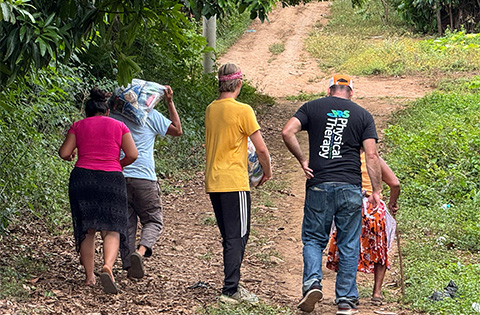 The bags are heavier than they look. So are the hills.
Thank you
Thank you to Irene, who coordinates the teams, keeps the schedule from collapsing, absorbs the chaos nobody else sees, and still has her eyes open wide enough to catch a moment like this one on a hill.
Thank you to the gentleman who carried the bag. You almost certainly don’t know that anyone was watching, or that your walk up that hill would end up here. It did.
Thank you to every team member who has come, gone home, and let what they saw here keep working on them — including the ones now considering medicine because of a week spent playing with kids in a village.
Thank you to our full-time team — Julio, Rachel, Becky, Rocio, Shawn, Irene, and everyone who makes two back-to-back mission weeks possible without letting the regular work slip.
Thank you to our partners, who fund the clinics, the food bags, and the trucks that get us there.
And thank you to the families in the villages, who welcome all of us — the ones who know how things are done and the ones still learning.

