
Clinic stories from Nurse Becky
Most of what happens in a village clinic never makes it into a report. It’s too small, too ordinary — a conversation, a gesture, someone deciding to trust you.
Every so often one of those moments gets written down. This is one of them, from Becky’s most recent monthly ministry report, and it’s worth your four minutes.
The advantage of grey hair
Becky has noticed something about who gravitates toward her in the villages.
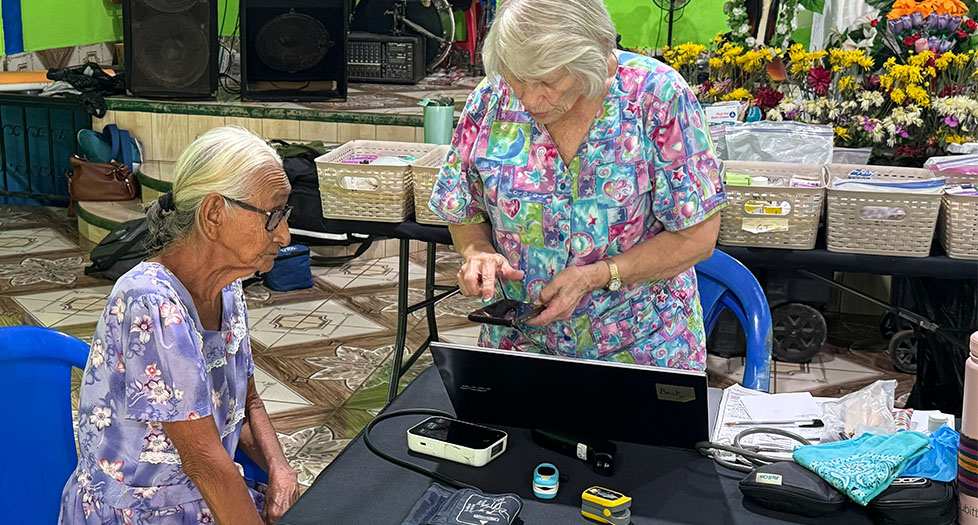
“Some of the elderly ladies seem to connect with me due to our similar age! We can commiserate about the increasing aches and pains of advancing age.”
There’s real ministry strategy hiding in that sentence, though I doubt Becky thought of it that way when she wrote it.
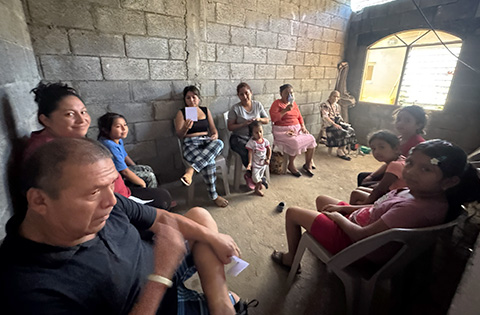
An older woman in a Guatemalan village has spent decades being talked past. Younger people explain things to her. Officials hurry her along. Medical care, when she gets it at all, tends to arrive in a rush from someone half her age who has forty more patients waiting.
Then she meets someone her own age who knows exactly what her knees feel like in the morning. The dynamic shifts. It isn’t a professional treating a case. It’s two women comparing notes on getting older, one of whom happens to be able to help.
And because Becky serves on our full-time team rather than passing through with a visiting group, that connection isn’t a one-week event. She’ll be in that village next month, and the month after. The elderly women who gravitate toward her are building a relationship with someone who is actually going to be there.
A pain Becky already knew
Last month a woman came in with pain on the left side of her head and face, running down through her shoulder and arm.
Becky recognized it immediately — not from a textbook, but from her own body. She had suffered the same thing in her left arm and neck several years ago.
So she did what she’d have done for a friend. She showed the woman a set of neck exercises that had helped her.
And then the woman said something Becky didn’t expect.
“Terapia”
The patient nodded and told her what she was describing was called “Terapia.”
Therapy. Physical therapy.
Becky’s response, in her own words:
“Exactly! She taught me a new Spanish word to use with my patients as I helped her with her discomfort.”
Sit with that for a second.
A woman came to a free clinic in a village for help with her neck. In the middle of receiving care, she turned around and taught the medical provider a word that Becky will now use with every Spanish-speaking patient she sees — for as long as she serves here, which is to say for years.
She didn’t just receive. She contributed. And she contributed something Becky genuinely needed and didn’t have.
Why that matters more than it looks
We talk often at GSG Missions about the difference between charity and partnership, and it can sound like a slogan if you’re not careful. Here’s what it looks like in practice, in one exchange, in one folding chair, in one village.
Charity has a direction. It flows from the person who has to the person who hasn’t, and everyone in the room knows which is which.
What happened between Becky and that woman didn’t have a direction. Becky brought medical knowledge and personal experience. The patient brought language and her own understanding of her body. Both of them left with something they didn’t walk in with.
That’s not a nice bonus on top of the medicine. For a person in extreme generational poverty — who is used to being the one who always needs, always receives, always says thank you — being useful to someone else is its own kind of care. It’s dignity, handed back.
The best moments in our clinics tend to look exactly like this one. Nobody planned it. It just happened, because two people were actually paying attention to each other.
The story isn’t finished
Here’s how Becky ended it:
“I await our next visit to her village to see if her ‘Terapia’ worked to relieve her stiff neck.”
That’s the whole model in one line.
We’re going back. There’s a follow-up. Becky will look for that woman’s face, and she’ll ask how the neck is doing — and the woman’s record, exercises and all, will be right there on the tablet when she does.
A one-time clinic can’t ask that question. A ministry that keeps returning to the same villages can. It’s the difference between treating a symptom and walking with a person, and it’s why we build for the long haul instead of the photo.
Would you pray with us?
For the woman with the stiff neck — that the “Terapia” is working, and that she comes back so Becky can find out.
For Becky, and for the trust she’s building village by village, one conversation at a time.
For the elderly in the villages we serve — often the most overlooked people in a community, and frequently the most faithful.
Thank you
I want to end this one by naming the people who made that exchange possible, because a moment like it doesn’t happen on its own.
Thank you to Becky, who didn’t come for a week — she came to stay. Nursing is the profession that spends the most time actually beside a patient, and it shows in every story she sends us. Serving full time means the unglamorous version: the same roads, the same heat, the same folding chair, month after month, long after the novelty has worn off. That kind of steadiness is what makes a village trust you, and it’s why a woman felt comfortable enough to correct her provider’s vocabulary.
Thank you to our whole full-time team, Guatemalan and otherwise — the ones who load the truck, drive the roads, translate the conversations, run triage and pharmacy, and are still in these villages long after any visiting team’s plane has taken off. You are the continuity. This ministry is yours as much as anyone’s.
Thank you to the churches and teams who send people, supplies, and prayer, and who keep asking how the work is going months after they’ve come home.
Thank you to our partners and donors. You may never meet the woman with the stiff neck. You’ll likely never know her name. But the reason there was a clinic in her village that day — with a provider who had time to listen, and exercises to teach, and a plan to come back — is that you decided this mattered enough to fund.
And thank you to the people of the villages we serve, who open their doors, share their stories, wait patiently in the heat, and occasionally teach us a word we needed to know.
We don’t take any of it for granted.

